Exploring the realm of Mortgage Rates for Investment Properties unveils a crucial aspect of real estate investing. From understanding the basics to navigating strategies, this topic offers a comprehensive guide for investors seeking financial growth and stability.
Delve deeper into the nuances of mortgage rates for investment properties and discover how these rates play a pivotal role in shaping investment decisions and returns.
MORTGAGE RATES
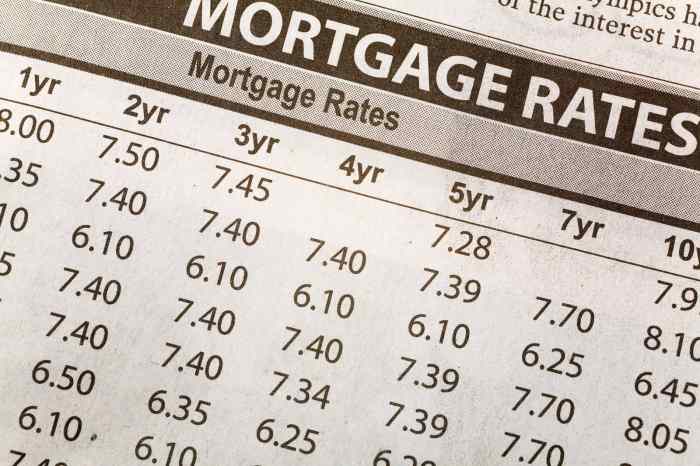
Mortgage rates refer to the interest charged on a mortgage loan used to purchase a property. These rates can vary depending on several factors and play a crucial role in determining the overall cost of borrowing for an investment property.When it comes to investment properties, mortgage rates are influenced by factors such as the borrower’s credit score, the loan-to-value ratio, the property’s location and condition, and the overall economic climate.
Lenders also consider the type of investment property, whether it is a single-family home, a multi-unit property, or a commercial property, which can impact the interest rate offered.
Factors Influencing Mortgage Rates for Investment Properties
- The borrower’s credit score: A higher credit score typically results in lower mortgage rates.
- Loan-to-value ratio: Lenders may offer different rates based on how much of the property’s value is being financed.
- Property type: Different types of investment properties may come with varying risk levels, affecting the interest rate.
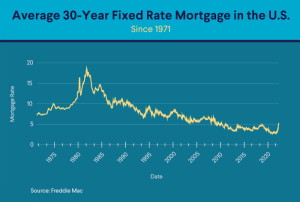
- Economic conditions: Overall economic factors, such as inflation and the state of the housing market, can influence mortgage rates.
Comparison of Mortgage Rates for Investment Properties and Primary Residences
When comparing mortgage rates for investment properties to primary residences, it is common to see slightly higher rates for investment properties. Lenders usually perceive investment properties as riskier investments compared to primary residences, which leads to higher interest rates to compensate for the increased risk. Additionally, down payment requirements for investment properties are often higher than for primary residences, further impacting the interest rates offered.
IMPORTANCE OF MORTGAGE RATES FOR INVESTMENT PROPERTIES
Understanding mortgage rates is crucial for real estate investors as it directly impacts the cost of financing when purchasing investment properties. Fluctuations in mortgage rates can have a significant effect on the overall financial health of an investment portfolio.
Impact of Mortgage Rates on Investment Property Purchases
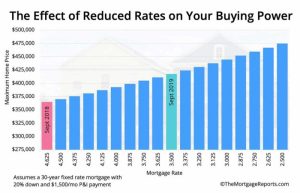
- Low mortgage rates can make it more affordable for investors to finance the purchase of rental properties, potentially increasing the number of properties they can acquire.
- On the other hand, high mortgage rates may deter investors from purchasing additional properties or reduce their profit margins due to increased borrowing costs.
Effect of Mortgage Rates on Return on Investment for Rental Properties
- Lower mortgage rates can lead to lower monthly mortgage payments, increasing cash flow and potentially boosting the return on investment for rental properties.
- Conversely, higher mortgage rates can eat into profits, especially if rental income is not sufficient to cover the increased borrowing costs.
TYPES OF MORTGAGE LOANS FOR INVESTMENT PROPERTIES
When it comes to financing investment properties, there are several types of mortgage loans available to investors. These loans come with different terms, interest rates, and conditions, so it’s essential to understand the options before making a decision.
Fixed-Rate Mortgages
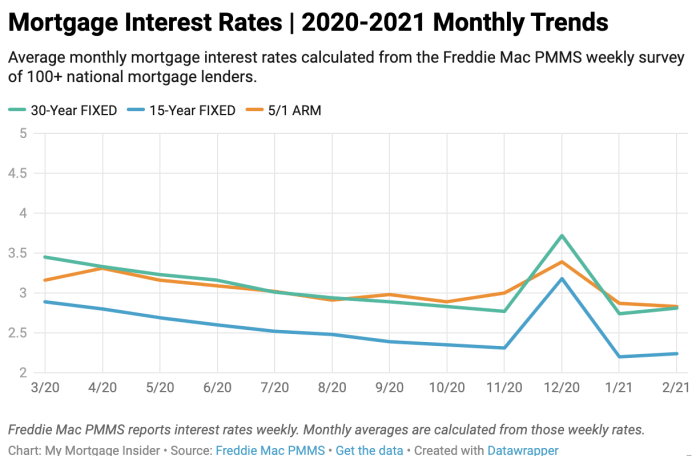
Fixed-rate mortgages for investment properties offer a stable interest rate throughout the loan term. This means that your monthly payments will remain the same, providing predictability and ease of budgeting. While the initial interest rate may be slightly higher compared to adjustable-rate mortgages, fixed-rate mortgages protect investors from potential interest rate hikes in the future.
Adjustable-Rate Mortgages (ARM)
Adjustable-rate mortgages, on the other hand, have interest rates that can fluctuate over time based on market conditions. These mortgages often start with a lower initial interest rate compared to fixed-rate mortgages, making them attractive to investors looking to take advantage of lower rates in the short term. However, there is a risk of interest rate increases in the future, which could lead to higher monthly payments.
Terms and Conditions of Investment Property Loans
When applying for a mortgage loan for an investment property, lenders typically have specific terms and conditions that borrowers must meet. These may include requirements for the down payment amount, credit score, debt-to-income ratio, and property type. Investment property loans may also have higher interest rates and stricter approval criteria compared to loans for primary residences.Investors should carefully review and compare the different types of mortgage loans available for investment properties to determine which option best suits their financial goals and risk tolerance.
STRATEGIES TO SECURE FAVORABLE MORTGAGE RATES
When it comes to securing favorable mortgage rates for investment properties, investors need to be strategic in their approach. Here are some tips to help improve your chances of getting lower mortgage rates:
Importance of Credit Scores
Maintaining a good credit score is crucial when it comes to obtaining favorable mortgage rates for investment properties. Lenders use your credit score to assess your creditworthiness and determine the interest rate they can offer you. A higher credit score typically results in lower mortgage rates, so make sure to keep your credit in good standing by paying bills on time and keeping credit card balances low.
Negotiating with Lenders
Don’t be afraid to negotiate with lenders when it comes to mortgage rates for investment properties. Shop around and compare rates from different lenders to see who can offer you the best deal. Once you have an idea of what rates are available, use this information to negotiate with your preferred lender. You may be able to secure a lower rate by highlighting your financial stability, the potential for rental income from the investment property, or by paying points upfront to lower the rate.
As we conclude our exploration of Mortgage Rates for Investment Properties, it becomes evident that a nuanced understanding of these rates is essential for successful real estate ventures. By grasping the intricacies of mortgage rates and implementing strategic approaches, investors can optimize their returns and pave the way for long-term financial success in the realm of real estate.
Q&A
What factors determine mortgage rates for investment properties?
Mortgage rates for investment properties are influenced by factors such as the investor’s credit score, the property’s location, and current market conditions.
How do fluctuations in mortgage rates impact investment property purchases?
Fluctuations in mortgage rates can directly affect the affordability of investment properties, influencing the overall cost of financing and potential returns.
What are the key differences between fixed-rate and adjustable-rate mortgages for investment properties?
Fixed-rate mortgages offer stable interest rates throughout the loan term, while adjustable-rate mortgages have rates that can fluctuate based on market conditions.
How can investors negotiate favorable mortgage rates with lenders?
Investors can improve their chances of securing favorable mortgage rates by showcasing a strong credit history, providing a substantial down payment, and comparing offers from multiple lenders.